Brancusi Behind the Camera
With advice from Man Ray, Brancusi turned photography into a way of thinking through sculpture. Light, reflection and even imperfect exposures became part of the experiment.
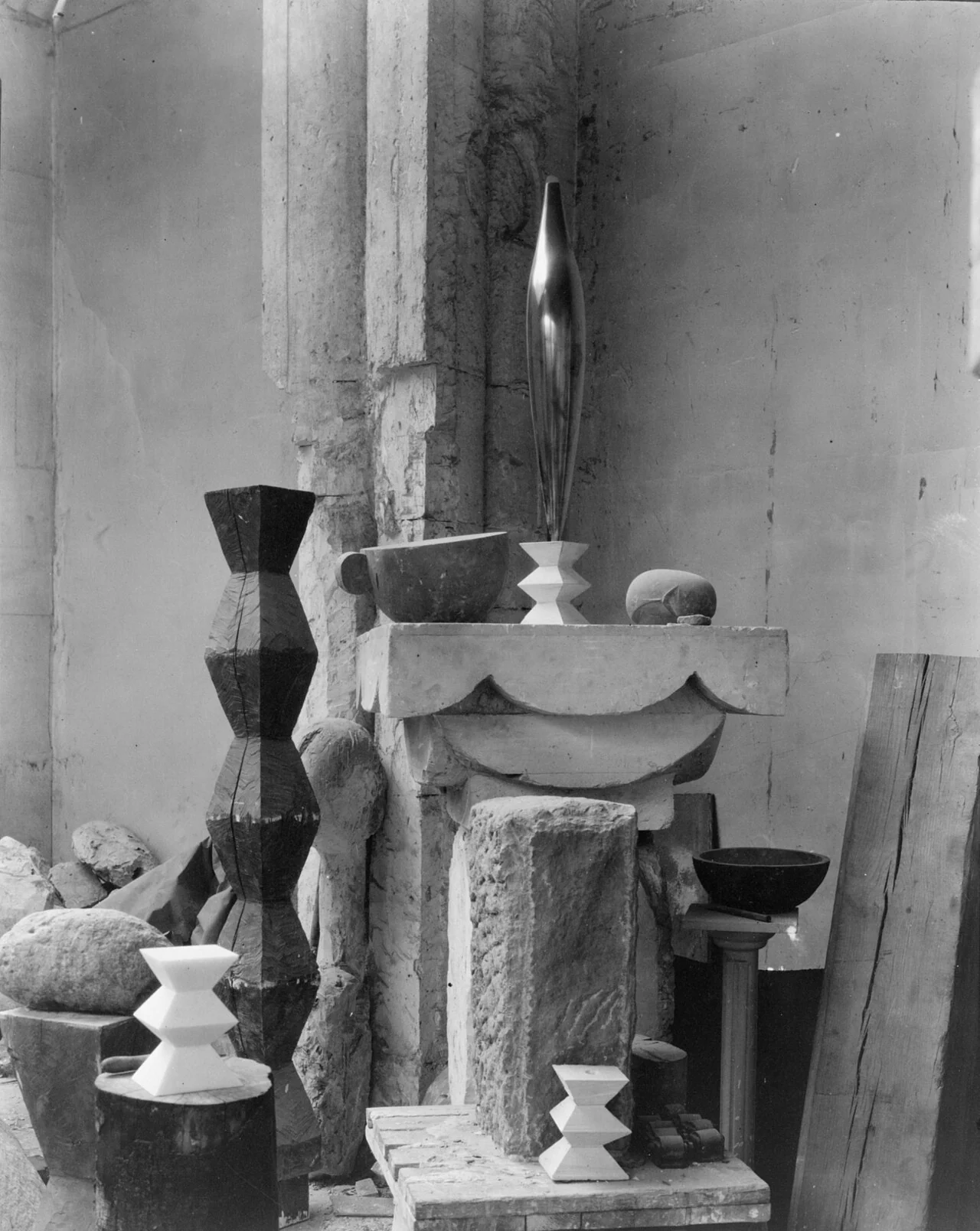
The camera offers a sculptor a peculiar opportunity. It translates volume into a flat image, but it can also reveal something a walk around an object might miss: a brief reflection, an unexpected overlap, a surface almost consumed by light. Brancusi used that tension between what a photograph records and what it transforms.
Advice between friends
Among the Centre Pompidou's photographs is a small gelatin silver print of Brancusi and Man Ray having lunch in the studio, dated around 1921. Its subject supplies a useful starting point for their association: two artists sharing an ordinary occasion in a working space. The history of their exchange can begin at that human scale, before it becomes a story about innovations in photographic technique. 1
The museum's chronology dates Brancusi's installation of a photographic workspace within his sculpture studio to 1921. Man Ray advised him on buying equipment. Bringing the camera into the place where he made sculpture allowed Brancusi to continue investigating form, light and material through another medium. 2
There is a practical intelligence in that proximity. A photograph can become an occasion to reconsider the object before it leaves the room. Its flattened silhouette may prompt a new viewpoint; its highlights may send attention back to the surface. We need not assume that every photograph produced a subsequent alteration to recognise the value of keeping both kinds of looking close at hand.
A darkroom, and room for disagreement
Man Ray also helped Brancusi establish a darkroom. Technical assistance did not mean that Brancusi simply adopted someone else's photographic judgement. He was particular about how his sculptures appeared, and few other photographers were permitted to photograph them; MoMA identifies Charles Sheeler as one of those exceptions. 3
A pairing in MoMA's 2014 exhibition A World of Its Own brings their shared interests into focus. A shadowy studio photograph by Brancusi appeared beside Man Ray's Laboratory of the Future of 1935. In Man Ray's image, a shining orb reflects the surrounding walls and ceiling, compressing and distorting the room within its surface. The juxtaposition suggests an affinity in their attention to space and reflection. It does not make the two artists interchangeable. Each photograph directs the room towards a different visual result. 3
What an imperfect photograph can reveal
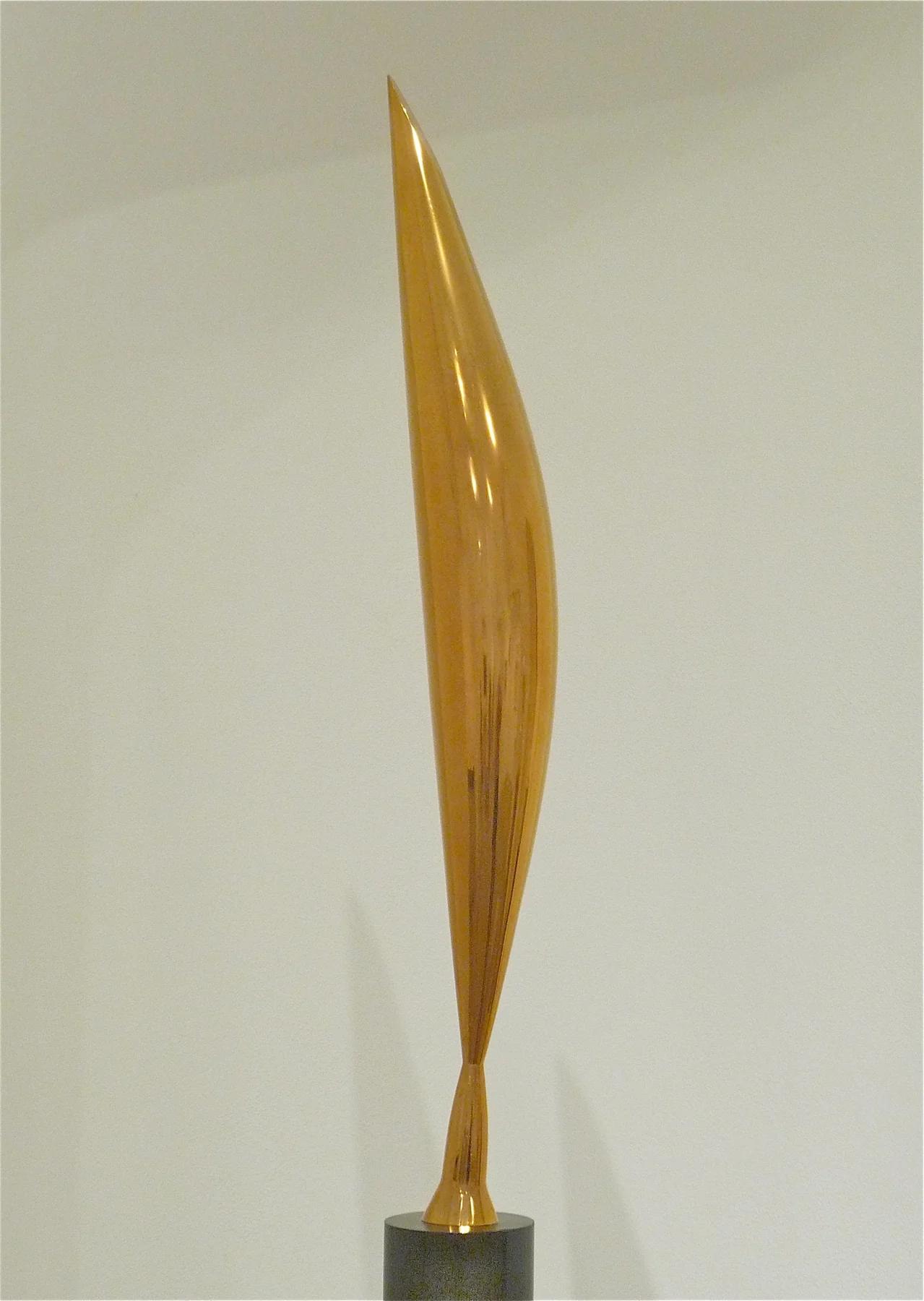
The Centre Pompidou's 2024 exhibition commentary describes photographs that departed from polished technical standards: uneven exposures, blurred focus, scratches and spots. It also recalls Man Ray's account of a bronze bird caught in sunlight so intense that the light seemed to expand beyond the object. Brancusi valued the transformation. An exposure that might disappoint a conventional record photographer could communicate the sculpture's energy. 4
He pursued actual movement too. A bronze Léda was placed on a polished metal disc and eventually set turning with a small motor. In his film of it, changing reflections altered the sculpture's appearance as it rotated. Light and movement made successive images of the same solid form. 4
These experiments give us a reason to treat his photographs as works requiring their own attention. A clear reproduction remains useful when we want to compare contours or examine material. Brancusi's images invite a further question: what kind of encounter with the sculpture does this particular photograph make possible? The answer may lie precisely where a highlight overwhelms an edge.
Sources & further reading
- 01Centre Pompidou — Brancusi et Man Ray déjeunant dans l'atelier, circa 1921
- 02Centre Pompidou — Constantin Brancusi: chronology, 1921
- 03Lucy Gallun, MoMA — Another World
- 04Centre Pompidou — Brancusi exhibition audio-tour transcript, Reflection and Motion
Image: Photo: Edward Steichen · resized · Public domain in the US.