Where the Sculpture Begins
A carved support could become a sculpture, and a sculpture could become a support. Following Brancusi's bases leads from Măiastra to the scale of an entire town.
When we look at a sculpture, our eyes often hurry past its support. A pedestal seems to explain itself: it carries the weight, raises the object and gives it a place in the room. Brancusi makes that habit unreliable. To understand the work above, we sometimes need to begin much closer to the floor.
A sculpture underneath a sculpture
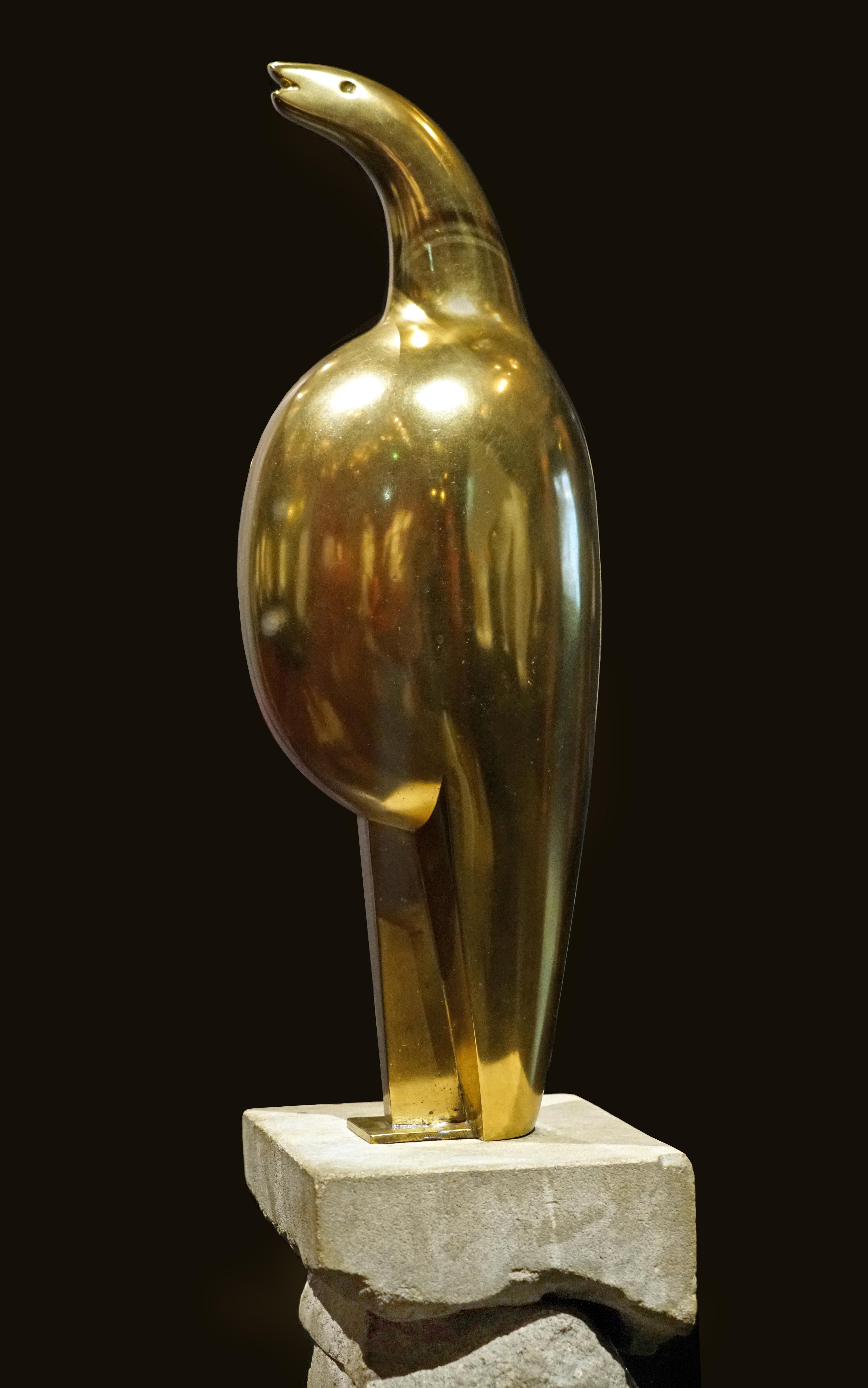
MoMA's Măiastra of 1910–12 provides a striking example. The white marble bird is about fifty-six centimetres high. Beneath it stands a three-part limestone pedestal measuring nearly one metre eighty. At the centre of this support is Double Caryatid, carved around 1908, which had previously been an independent sculpture. MoMA identifies this as Brancusi's first incorporation of an earlier work into a pedestal. 1
The proportions are worth pausing over. Most of the ensemble's height belongs to what a quick glance might dismiss as the base. Its central carved figures introduce another subject, another texture and another rhythm below the bird. The work asks us to move through several kinds of form before reaching its uppermost point. 1
Treating the pedestal as anonymous exhibition equipment would erase those relationships. Here, support has a history within the artist's work. A sculpture can change its role without ceasing to demand attention, and an object usually granted the highest position can depend on an equally deliberate composition underneath it.
The support grows upwards
The Endless Column makes a different move. MoMA's oak version of 1918, the earliest surviving example of the motif, develops a shape Brancusi had already used for bases. Two truncated pyramids meet at their broad ends; repeating that element produces a rising succession of expansions and narrowings. What had supported another sculpture becomes a work in its own right. 2
This column is a little over two metres tall. Its title nevertheless encourages the eye to imagine continuation beyond the wood's actual end. The repeated unit makes the next unit conceivable: we learn the rhythm as we look. Brancusi achieves the suggestion of vast extension with a form whose material limits remain plainly visible. 2
Those limits matter. Cuts and gouges can still be seen in the oak. The column's geometry does not conceal its making or ask us to forget the tree-derived material. An idea of infinity takes shape through an object with a specific height, grain and worked surface. 2
A town enters the composition
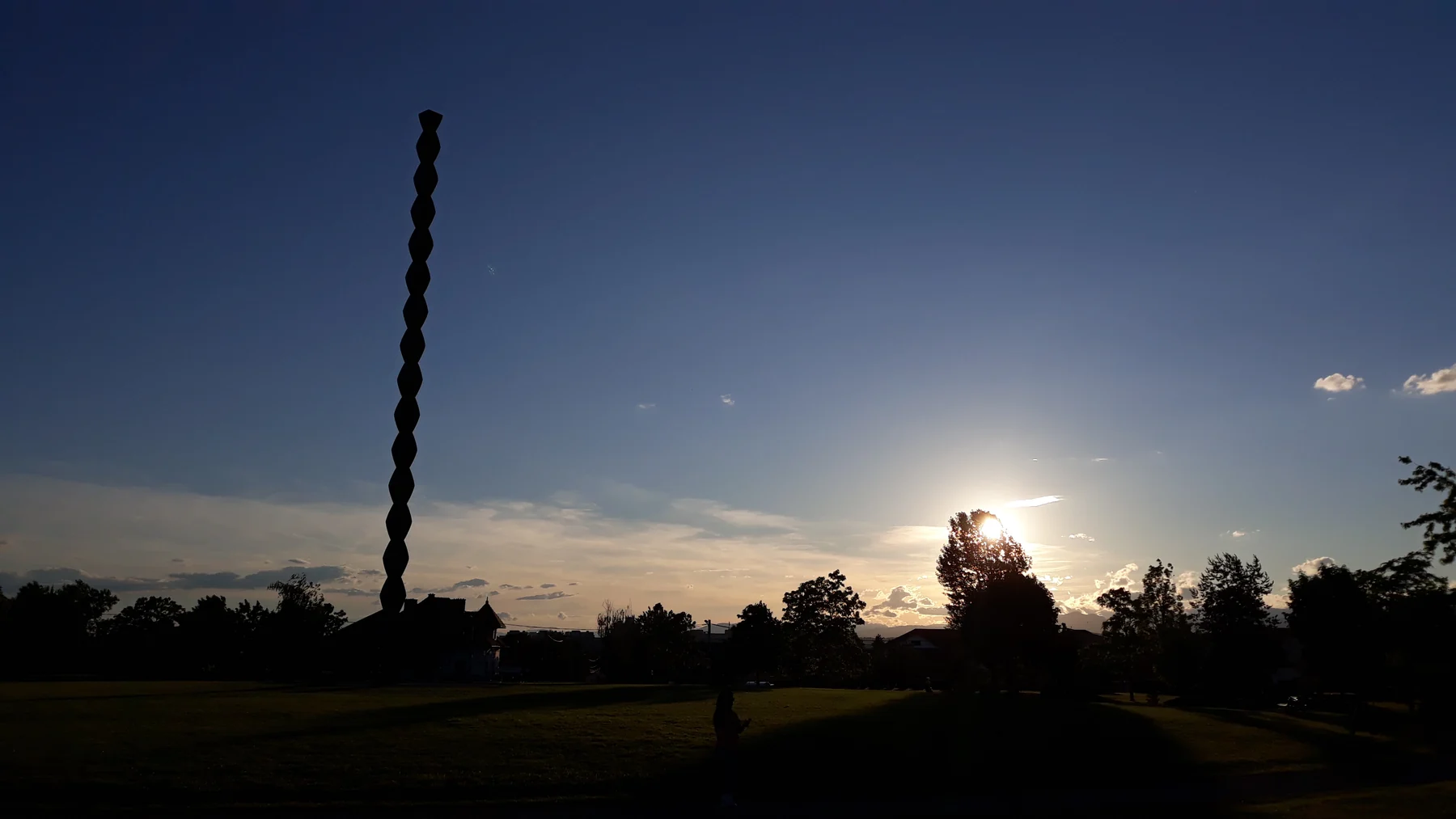
At Târgu Jiu in Romania, the column became part of a public memorial created in 1937–38 for those who died defending the town during the First World War. The ensemble includes the Endless Column, Table of Silence, Gate of the Kiss and the seating of the Alley of Chairs. UNESCO describes a conceptual axis approximately 1,500 metres long, connecting two parks through the Avenue of Heroes and incorporating an existing church. 3
The relationship between sculpture and setting has expanded to an urban scale. The column's vertical rise is experienced against the surrounding park and the comparatively modest buildings along the route. Distances, approaches and the sequence of encounters contribute to the ensemble. Its parts belong to a memorial that exceeds any single object. 3
There is no need to turn that development into an inevitable progression. The small pedestal and the public monument pose their own problems. Together, however, they invite a useful adjustment in how we look: give the support, the ground and the approach enough attention to discover what they contribute.
Sources & further reading
- 01MoMA — Maiastra, 1910–12, including Double Caryatid pedestal
- 02MoMA — Endless Column, version I, 1918
- 03UNESCO World Heritage Centre — Brâncuși Monumental Ensemble of Târgu Jiu
Image: Photo: Vlad Tamnos · resized · CC BY-SA 4.0.