When a Bird Went to Court
A customs dispute over Bird in Space forced a New York court to examine what sculpture could be. The most revealing moment involved an ancient Egyptian hawk.
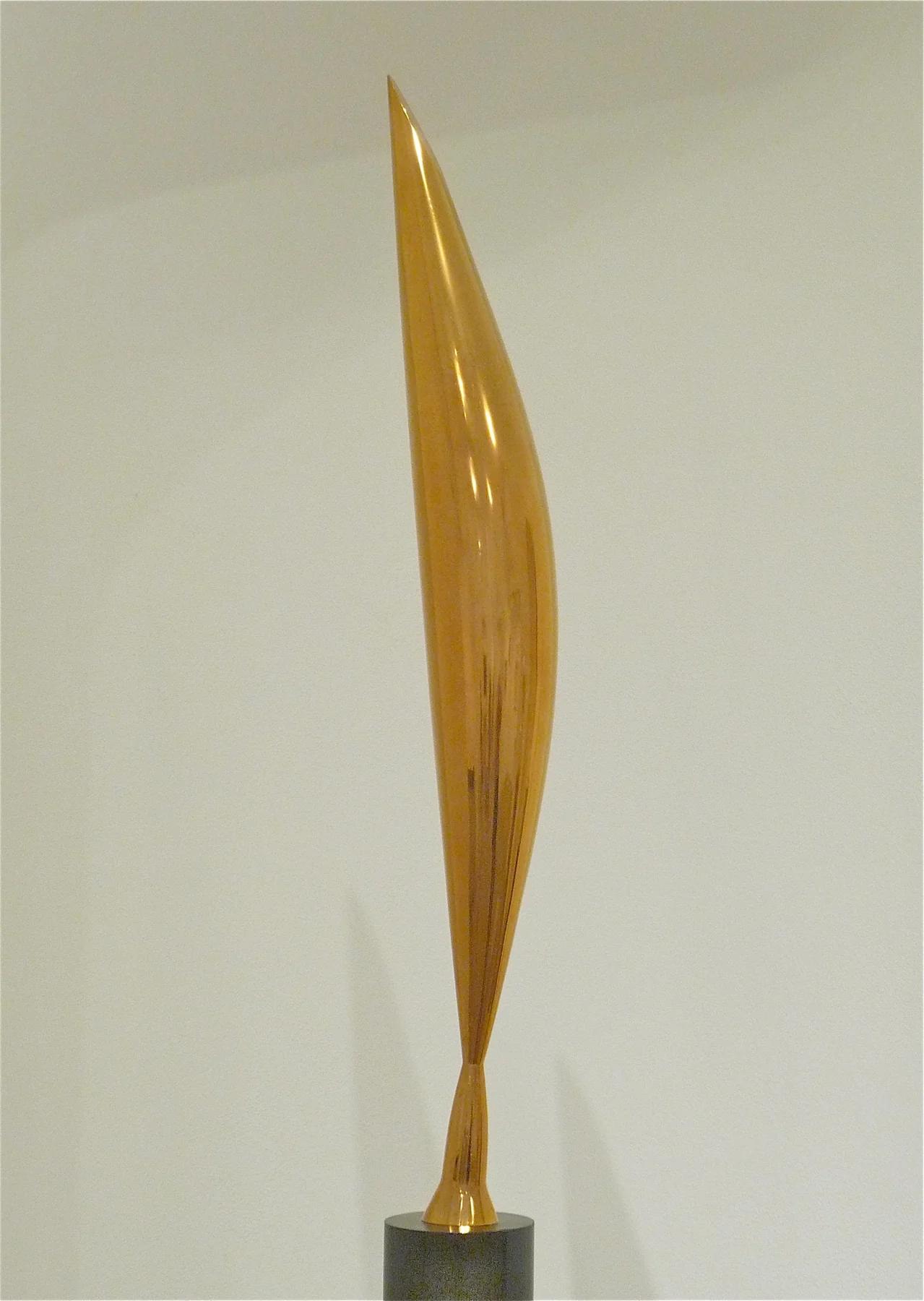
In 1926, a bronze by Brancusi arrived in New York for an exhibition at the Brummer Gallery. Its title was Bird in Space. Customs officials did not accept it as art. Works of art could enter the United States free of duty, but this object received a tariff of forty per cent of its value. A disagreement over classification became a test of the language used to recognise sculpture. 1
The particular bird
It helps to identify the object before discussing the controversy. Brancusi made several sculptures called Bird in Space, and photographs of different versions often accompany accounts of the case. The 1926 bronze purchased from the artist by Edward Steichen is now in the collection of the Seattle Art Museum. Its exhibition history records the Brummer show of November and December 1926, followed by the Arts Club of Chicago in early 1927. This particular bird had a journey of its own within a much longer artistic investigation. 2
A comparison with the Metropolitan Museum of Art's marble Bird in Space of 1923 makes the underlying problem easier to see. Wings and feathers have disappeared; the body is elongated, while head and beak have become a sloping plane. The Met explains the work through the movement of flight rather than the bird's anatomy. 3
That emphasis changes the task of recognition. The title directs attention towards an experience, but the form offers few of the features with which we ordinarily identify an animal. A viewer looking for a beak, claws and plumage will encounter a different proposition from one following an upward sweep. Neither approach requires specialist vocabulary. The difficulty begins when a legal category treats one way of looking as the only admissible one.
An ancient witness
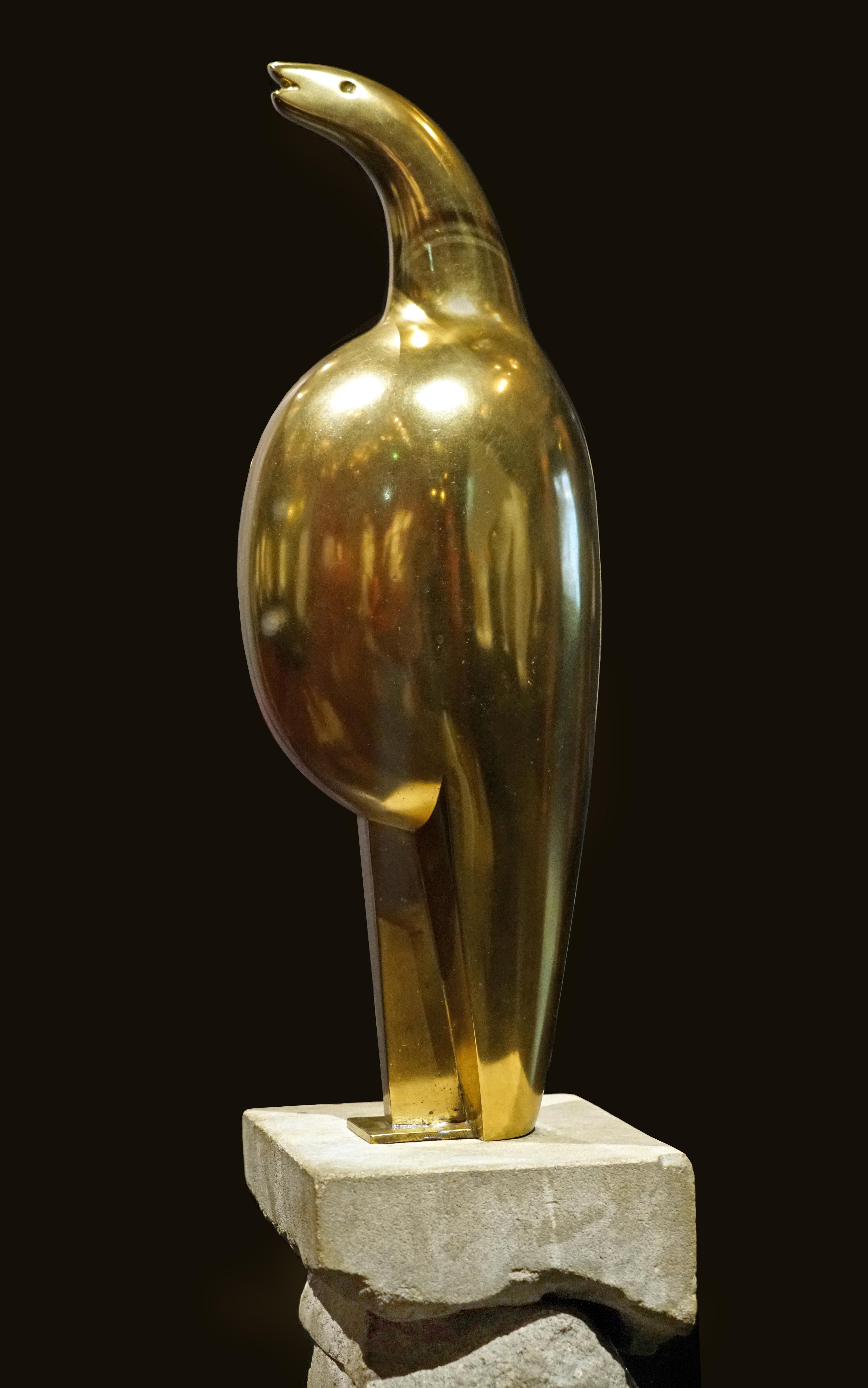
In the proceedings, sculptor Jacob Epstein defended Brancusi's work under questioning about his own qualifications, the object's appearance and the difference between an artist and a skilled mechanic. His most illuminating intervention reached beyond the contemporary art world. Epstein produced an ancient Egyptian hawk as a comparison. The exchange considered how a bird could remain recognisable without explicit feathers or feet. 4
The comparison complicated an easy division between venerable, understandable art and inexplicable modern sculpture. Abbreviation had a history. Brancusi's reduction of visible detail could be considered beside an older sculptural language, even where the resulting forms were very different.
The published testimony also preserves Epstein's distinction between being able to polish a piece of metal and conceiving its particular form. The emphasis fell on artistic invention as well as workmanship. Recognition depended on more than identifying a material or a manufacturing skill. 4
A ruling with a boundary
The court ruled in Brancusi's favour in 1928. 4 Judge Waite acknowledged that a newer school of art pursued abstract ideas instead of straightforward imitation, and that its existence and influence had to be taken into account whether or not the court shared its sympathies. The sculpture qualified for free entry. 1
This was a consequential decision about a particular object under customs law. It supplied no final definition of art for every future dispute. Its continuing interest lies in watching an established category encounter something it had difficulty accommodating. The bronze had not acquired wings during the proceedings. What changed was the willingness to recognise a different kind of sculptural intention.
Sources & further reading
- 01MaryKate Cleary, MoMA — But Is It Art? Constantin Brancusi vs. the United States
- 02Seattle Art Museum — Bird in Space, 1926, collection record and exhibition history
- 03The Metropolitan Museum of Art — Bird in Space, 1923
- 04Brancusi v. United States — testimony and judgment extracts, reproduced by Bellevue College
Image: Photo: Art Poskanzer · resized · CC BY 2.0.