Socrates, Carved in Wood
Brâncuși’s oak philosopher opens onto a world of cut surfaces, improbable balance and imagined figures. Wood was one of his most expressive materials.
Brâncuși’s Socrates, made in 1922, balances an enormous oak head above a narrow neck. Openings become eyes and mouth. The figure has a watchful, almost vocal presence: an absorbing entrance into the sculptor’s work in wood. 1
A philosopher among friends
MoMA describes Socrates as carved directly into oak, with the weight of the head balanced above slender shoulders. The title carries a double association. It invokes the ancient philosopher and recalls Brâncuși’s friendship with Erik Satie, whose Socrate had been performed in Paris in 1920. Brâncuși called the composer Socrates; Satie called the sculptor Plato. 1
That exchange gives the wooden figure an intimate setting. Its philosophical identity could also belong to a conversation between friends. The open mouth leaves expression unresolved: listening, speaking and surprise all seem available. As a reading of the form, that ambiguity gives the figure its liveliness.
The narrow neck makes the head seem unusually consequential, as though the work’s entire character had gathered there.
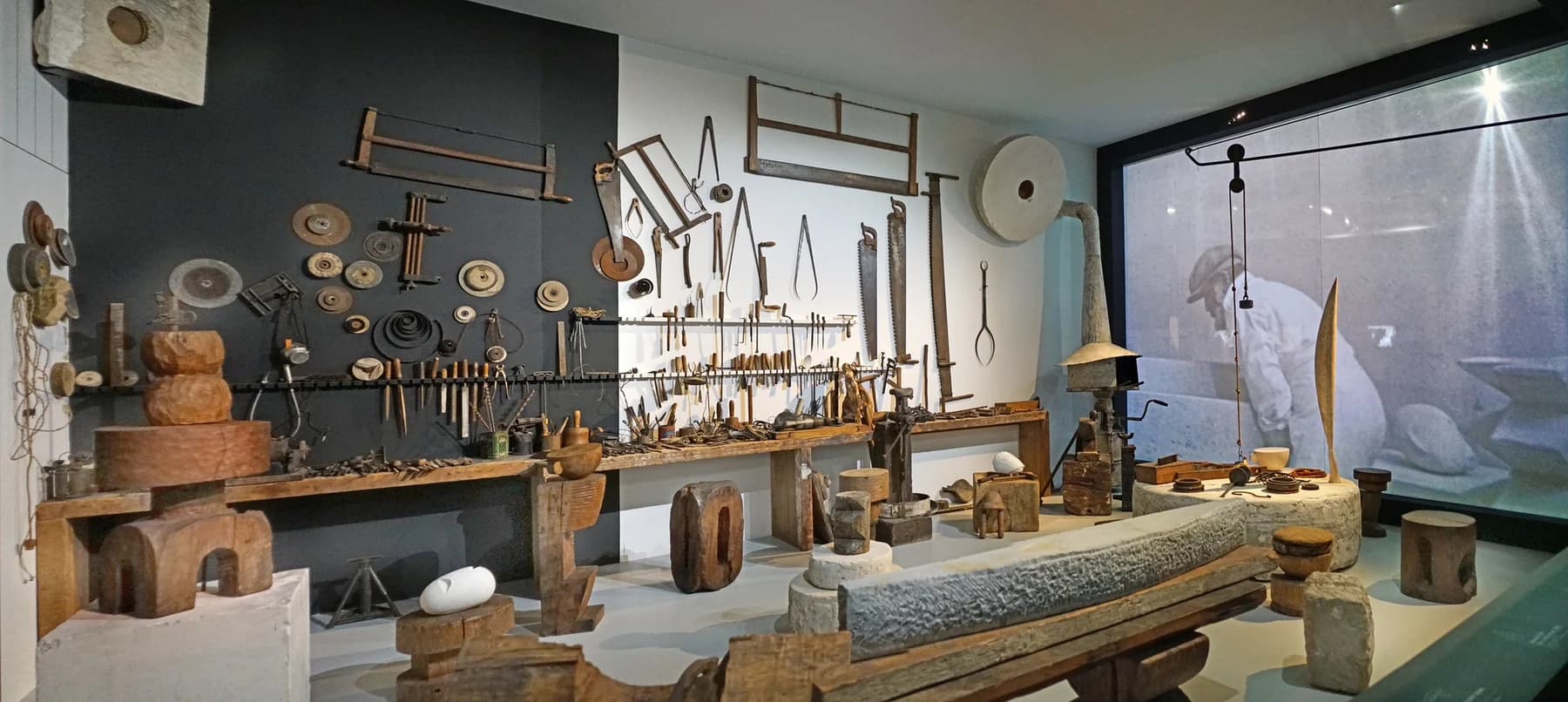
A vocabulary of timber
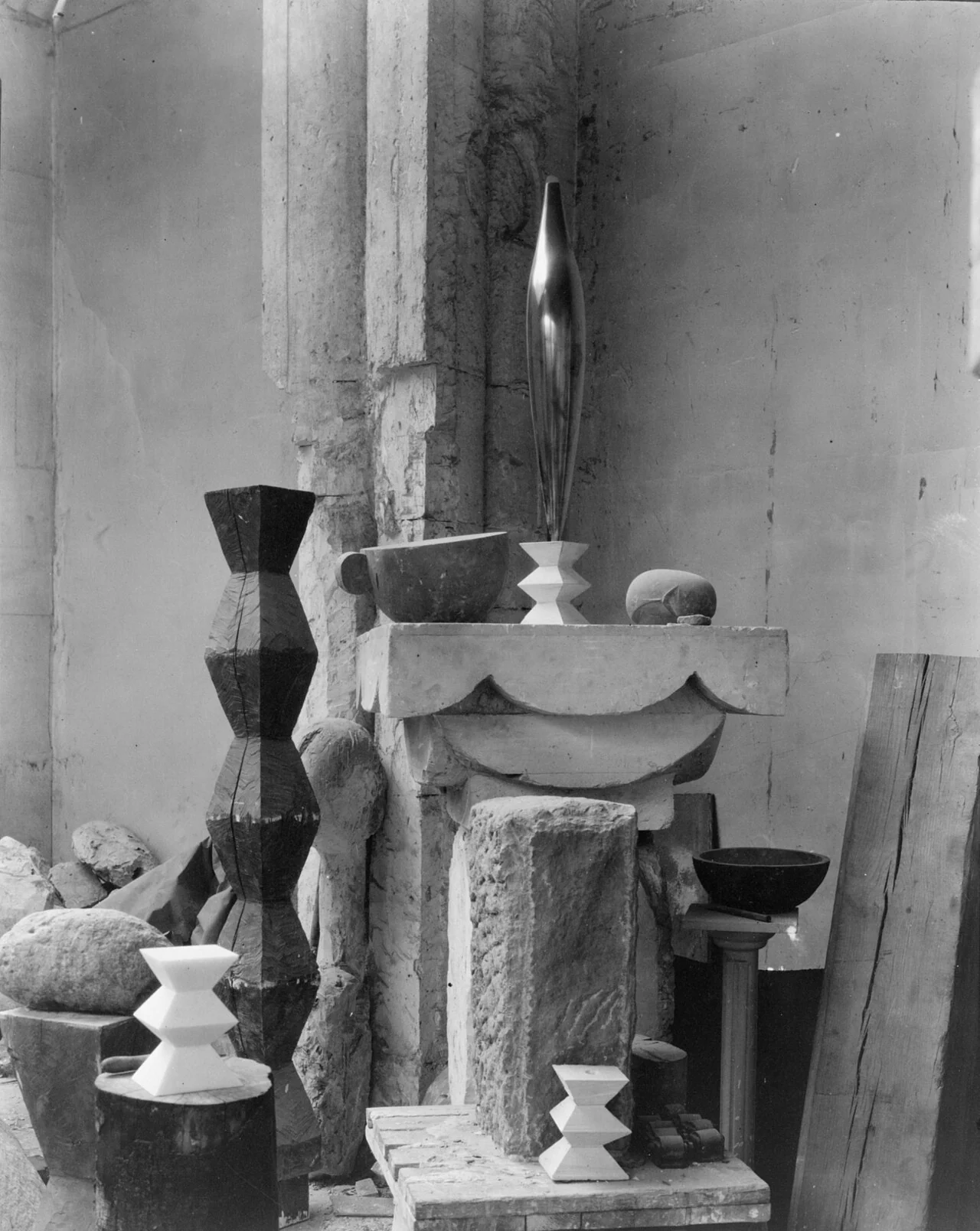
Wood offered Brâncuși several kinds of structure. MoMA’s collection checklist places the oak Endless Column of 1918 alongside The Cock, carved in cherry in 1924. One repeats a geometric unit upwards; the other compresses a bird into a sharp, rising profile. Their different silhouettes show how widely a sculptor can work within the category of carving. 2
The checklist also identifies artist-carved oak beneath the bronze Young Bird of 1928. Timber could be a figure, a vertical sequence or a support in a work made from several materials. A pedestal might introduce its own proportions and rhythms, preparing the eye for the form above. The sculpture’s encounter with the floor could become as considered as its upper outline. 2
Taken together, these works encourage a slower examination of structure. Follow a narrowing section into a broader one, or a repeated shape into its neighbour. The eye begins to register the decisions that make a form stand, turn or rise. Carving becomes legible as an arrangement of intervals and masses.
A king for an unbuilt room
The scale of that ambition becomes especially clear in King of Kings, an oak sculpture about three metres tall. Dated around 1938, it was intended for the Temple of Meditation commissioned by the Maharaja of Indore. The project remained unbuilt. Guggenheim Bilbao’s account describes a proposed sanctuary with an underground entrance, an opening above and a reflecting pool within. Sculpture belonged to an imagined experience of architecture and light. 3
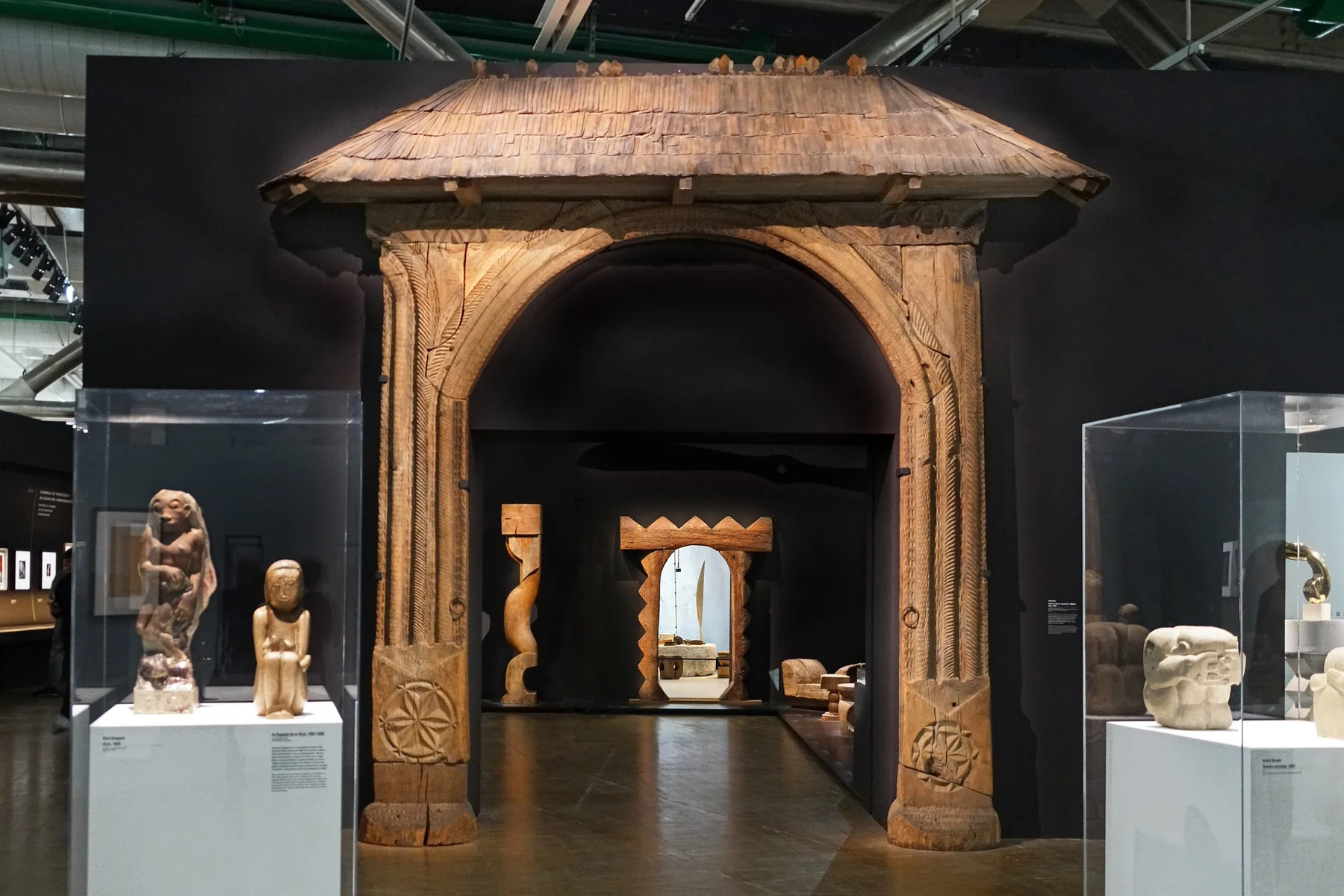
The museum connects the work’s forms with Romanian woodwork, African carving and modern abstraction. That range of references suggests how much could meet within a single piece. Timber carried associations of making, cultural memory and bodily presence while accommodating highly inventive shapes. 3
Moving between these wooden works, the changing scale becomes striking. A figure can recall a friend; a column can establish a rhythm; a king can belong to an entire imagined room. Wood gave Brâncuși a way to think through all three, keeping the presence of the material close to the possibilities of the form.