The Studio as a Work of Art
At impasse Ronsin, Brancusi made the distance between sculptures part of the work. His studio offers a different way to think about looking, arranging and preserving.
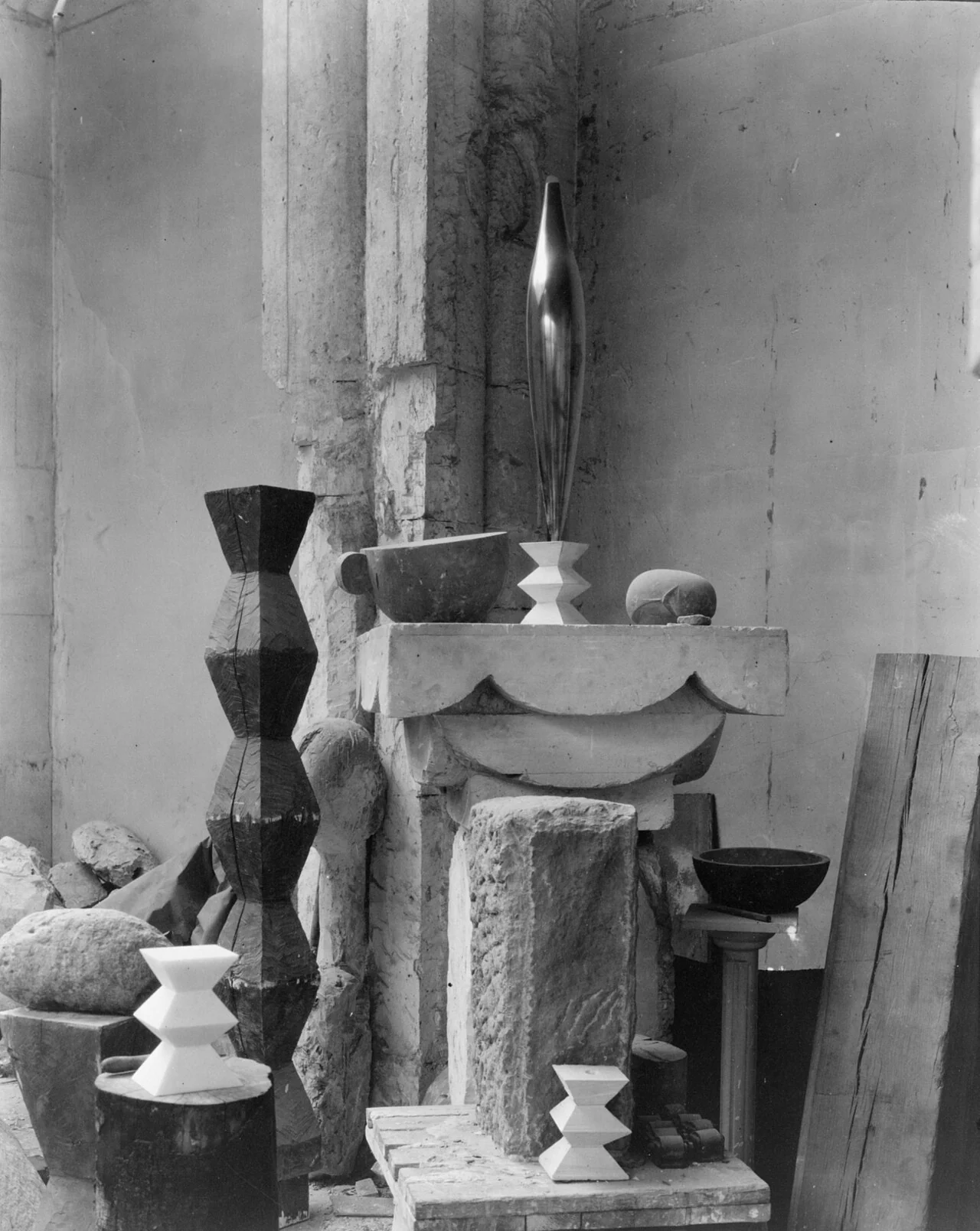
A sculpture usually arrives in a photograph with its surroundings politely removed. The background clears, the object stands alone, and attention settles on its outline. Brancusi makes that familiar convention worth questioning. What happens to a sculpture when its neighbours disappear? Where does the work end: at the edge of its material, at the bottom of its base, or somewhere in the space around it?
A room with several lives
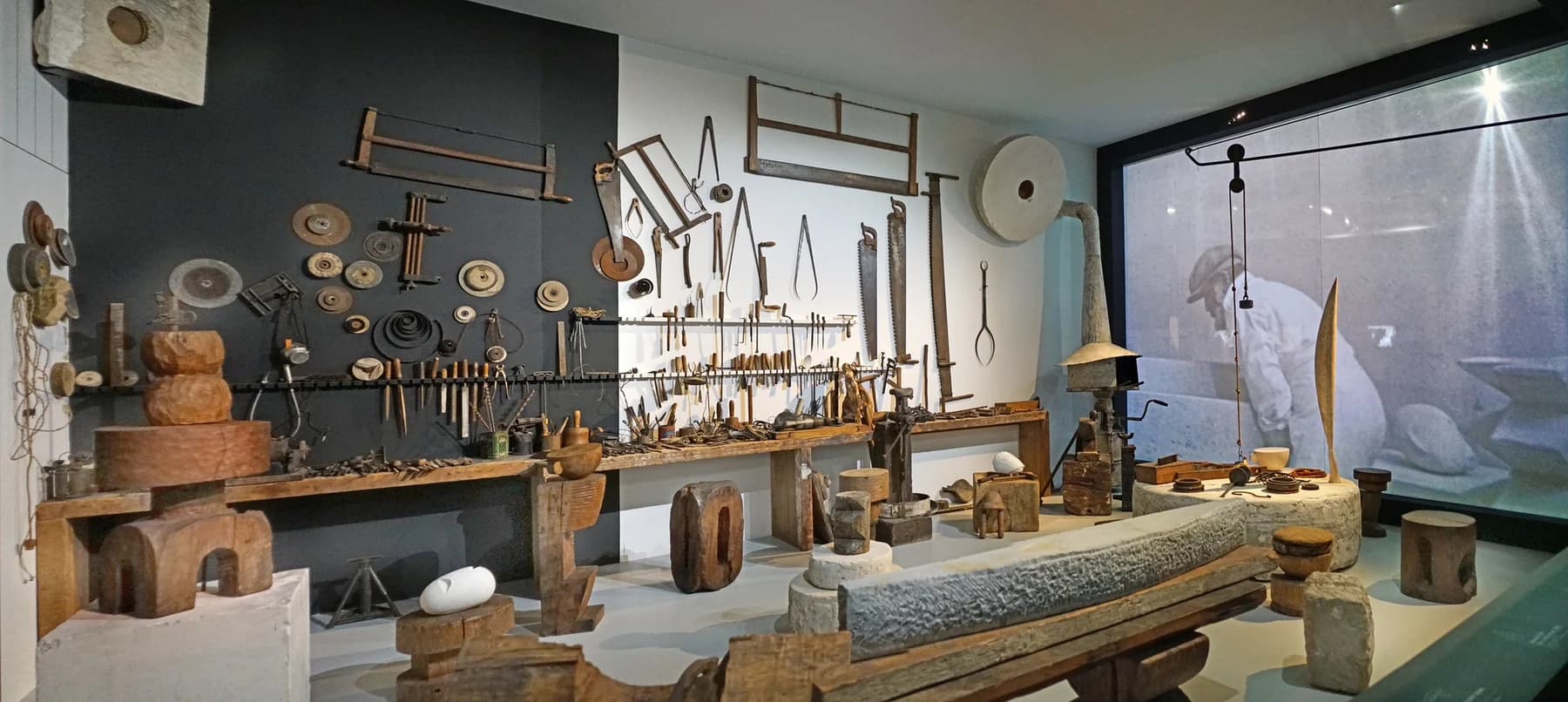
From 1916 until his death in 1957, Brancusi's studios at impasse Ronsin in Paris brought making, living and exhibiting into the same environment. He worked there, received friends and clients, and presented his sculptures. Hand-carved furniture, bases, tools, photographs and films belonged to this sustained activity. MoMA's account of the studio places these objects alongside the sculptures, giving the ordinary equipment of an artist's life its due weight. 1
That mixture changes how we might read a studio view. A stool asks us to imagine a seated body; a tool recalls the labour that made a surface; a pedestal establishes the height from which a form meets the eye. These things offer different kinds of access to sculpture. Looking at them together gives us a richer vocabulary than the familiar division between a masterpiece and everything surrounding it.
The arrangement mattered
A disappointing exhibition sharpened the issue. In 1922, twenty-one of Brancusi's sculptures appeared in a New York exhibition of contemporary French art. Unable to attend, he saw photographs of the installation. Works stood against walls or among other artists' pieces; he felt that the relationships sustaining them had been lost. The Centre Pompidou identifies this episode as an important moment in his attention to the space between sculptures. 2
During the 1920s, arranging the studio became a continuing artistic task. Later, when a sculpture was sold, Brancusi could replace it with a plaster cast to maintain the ensemble. The substitution is revealing: the departing object's place still had work to do. His 1956 bequest to the French state also required the reconstruction of the studio. Preserving the sculptures alone would leave an essential part of his achievement behind. 2
We can understand that insistence without imagining a room frozen throughout his lifetime. Preserving a final arrangement and continually testing new ones are different stages of the same concern: how things act together.
A composition that could change
Brancusi called his arrangements groupes mobiles: mobile groups of sculptures, bases and pedestals. Photography gave these groups another life. As MoMA's exhibition The Original Copy explains, a physical sculpture can occupy only one position at a time, while photographs preserve several configurations of the same pieces. He assembled and reassembled them for the camera, keeping a visual record of their changing relationships. 3
This gives the studio photograph an unusual status. It records objects that existed, yet it also presents a chosen conjunction: this form beside that one, seen from here, at this moment. A later image can propose a different reading without cancelling the earlier one. The collection of photographs therefore helps us see arrangement as an ongoing practice rather than the finishing touch applied after making.
Try beginning with an interval when looking at one of these images. Follow the gap between two forms, then the change of scale between a sculpture and its support. The individual works remain compelling. Their relationships reward a slower second look.